We Get To Carry Each Other

•October 18, 2011 • Leave a Comment

In the midst of reading Paulo Coelho’s latest novel “Aleph,” right now and the other night I came across a wonderful parable about friendship.  It’s the story of two men…Ali and Aydi.

*         *         *

Ali is desperately in need of money and asks his boss for help.  His boss sets him a challenge: if he can spend all night on the top of a mountain, he will receive a great reward; if he fails, he will have to work for free.  Ali leaves work and immediately feels an icy wind blowing.  He knows that it’s going to be a horribly cold night and he suddenly feels afraid.  He doesn’t know if he has the strength to make it through the night and goes to his good friend Aydi.  He asks him if he thinks that he was mad to make the wager.  Aydi considers and then responds…

“Tomorrow night, when you’re sitting on the top of the mountain, look straight ahead.  I’ll be on the top of the mountain opposite, where I’ll keep a fire burning bright all night for you.  Look at the fire and think of our friendship, and that will keep you warm.  You’ll make it through the night, and afterwards…I’ll ask you for something in return.”

Ali takes his good friend’s advice, climbs the mountain, watches the fire, braves the cold and makes it through the night.  In the morning he returns to his boss and collects his money.  He immediately goes to Ayid’s house.

“You said you wanted some sort of payment in return,” Ali says.

Ayid replies, “Yes, but it isn’t money.  Promise that if ever a cold wind blows through my life, you will light the fire of friendship for me.”

When I read this passage initially, I was greeted within my imagination by the faces of so many friends that at one time or another in my life have been willing to climb that mountain, many of them willing to light the way, and some of them willing to do it more than once or twice.  To be met by so many faces while reading this story tells me that when it comes to friendship…I’m very blessed.  And unfortunately like most great blessings, it often goes taken for granted and left unsaid. If not for a well-timed letter from a great friend today, this would’ve been another one of those unrecognized opportunities.

When I take a hard look at it, many of these posts and in fact much of this blog is pure selfishness.  Here I write stories, messages, or lessons that I think or believe at the time will offer me some valuable advice later on down the road.  Recorded reminders when I’m in need of one. But this one isn’t for me, it’s for my friends…whom no matter the physical distance, I respect, cherish, and admire for their humor, advice, loyalty, quirkiness…but most of all for their spirit.  Life has blessed me with such an amazing group of friends — who each in their own way have reminded that their fire is always there and most importantly, to not let my own die out.  I often believe I’m not the friend I should be in return.  But that’s something I’ve learned about friendship, especially lately, we only remember the times we were carried and not when we were the ones to do the lifting.  That’s the selflessness and unconditional nature of it I suppose. It’s the wonderful piece of true friendship — you can just be yourself — and that’s the only person they want you to be.

I challenge you to think of the friends, your true friends, the ones that would climb that other mountain and light that fire just to remind you that they were there for you and would be no matter what.  Do you have their faces in your mind?  Can you hear their voice and the sound of their laugh?  Then maybe it’d be worth it to copy and paste the story of Ayid and Ali and send it to them.

Everybody gets cold sometimes…

A Sophomore at Rutgers

•September 22, 2011 • Leave a Comment
One year ago today, Rutgers University Freshman
Tyler Clementi took his own life.

Anniversaries always have a significance.  They force us to take a look back — to remember where we were and who we were at a certain point in our own history.  They also challenge us to remember what the world around us was like at on that day and in that moment.  If we reflect deeply enough, we think about how things have changed since that time — either in the way of progress, or sometimes unfortunately we realize only regression.

1 Year ago today, 18 year old Tyler Clementi committed suicide by jumping off of the George Washington Bridge.  At the time, he was a talented violinist full of potential.  He was a Freshman at Rutgers University for not even a month…and he was gay.

Much like in the case of any suicide, it’s dangerous and flat-out incorrect to simplify the reasons for the act, but the story that would engulf this young man’s memory would make two fellow Freshmen the villains.  Dharum Ravi was his new roommate and Molly Wei was his friend.  They hid a web cam in the room Ravi shared with Clementi, and captured footage of him making out with another boy.  They decided to broadcast this footage over the internet for anyone to see, and tweeted about it to get extra attention.

Several days later, Tyler Clementi killed himself.

What Tyler didn’t know at the time of his death, nor did anyone else, is that his story would spearhead a complex and controversial international debate about how we treat each other, the haunting consequences of bullying, the depths of teen depression, and the ugly issue of homophobia.

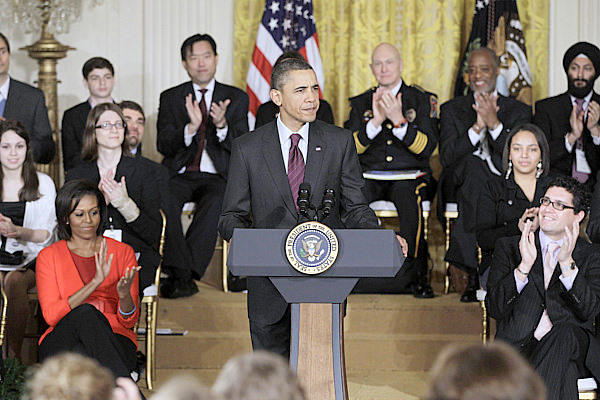
In March of 2011, President Obama gave a speech at the nation’s first Annual Anti-Bullying Summit

In the months to follow, these issues would come to the very forefront of not only American society, but politics as well.  President Obama’s Anti-Bullying Summit in March would draw unprecedented attention to federal anti-bullying initiatives and would try to bring some semblance of control and order to a fiery national debate.  State legislatures would start enacting tough anti-bullying laws and policies, none stricter than in Clementi’s home…here in New Jersey.

Students in High Schools and Colleges all across America would hold vigils in Clementi’s honor and anti-bullying and anti-homophobia protests.  Within each American home, these topics would become typical discussion at the dinner table…with questions such as, “What is bullying?” or “What is sexting?” sparking vague discussion. There is no equation to bullying, or clean definition — the issue is complex, ugly, and undefinable.  Those involved in a heated confrontation are often so immersed that they don’t know they even are bullying, or possibly adding fuel to its fire.  One thing is always for sure though…the victim always knows exactly what role they’ve been cast in.

For me personally, this tragedy took on a greater significance.  As a filmmaker, one of the topics and subjects I’ve innately always focused my work on is the causes and consequent overcoming of depression.  I too am a Rutgers graduate, and things I was witnessing around me during my sophomore year inspired me to use that summer to write the film “Wasteland.” The film’s story focused on four characters struggling with issues of identity, loss, and love in the modern college landscape — one of which would ultimately take their own life.  At the time, nobody had webcams, texting was still fairly new, and Facebook and Twitter where nowhere to be found.

Then, in 2008 I was given the great privilege of writing and directing the film “Sticks & Stones,” which dealt with the then, fairly new issue of cyberbullying — and how one average boy’s life would be shredded by a torrent of relentless attacks from the students he shared his days with.

It’s fairly safe to say, that throughout the last decade of my life I’ve used whatever creative talent I’ve been given to address these issues.

Rutgers is my school, New Jersey is my home.  I wasn’t just saddened, I was angry.  I felt like it shouldn’t happen here.  The truth is, it shouldn’t happen ANYWHERE.

I’ve dedicated much of the last year trying to develop new ways to prevent this type of tragedy from happening.  Working with other individuals now just as dedicated to this mission, we’re finding ways to confront the issues kids like Tyler feel they are all alone with at an end that is so tragically premature.

A year since his death I wonder how much we’ve really learned — and I challenge you to consider that we all, still have far to go.   In today’s America, it seems we rush to quick judgments and easy, neat solutions to complex issues.   We choose to wait and react to a situation (which often turns into a dramatic overreaction), instead of anticipating and being preventative.  We race to find the cause and effect, such as.. A gay boy was bullied so he killed himself, or the best way to beat a bully is to ignore him, or punch him in the mouth.  Case closed, right?  We want the assurance that we understand everything there is to know about an issue because we read one article or watch one CNN special, but we don’t.  We look for the external causes of and reasons for tragedy without ever looking inward to consider what WE could be doing to effect the greater issue for the better.

This week at CWE, our Advisory Board met to discuss where the organization is going, the issues we are compelled to take on, and what our programs are going to do to confront them.    In the middle of it, we came to the discussion of what part we could all play in CHANGE.  One of our board members shared a parable about two fisherman at a river…

*         *        *

In the middle of their peaceful work, two fisherman notice a child floating downstream, he’s struggling against the current and without their intervention — he’ll surely drown.  The first fisherman dives into the river and rescues the boy.  They resume fishing.  A little while later, there is another child.  This time the second fisherman dives in and rescues this child.  They again resume fishing.  An hour passes before they discover another drowning child, struggling to survive against the current.  The first fisherman, dives into the river and rescues this child.  Exasperated, and with this child in tow, the fisherman returns to the shore.  He discovers his friends’ rod on the ground and looks up the bank to see that the second fisherman is walking away.  He calls out to his friend, “where are you going?”  The other fisherman turns and calls back, “to see what’s going on upstream.”

*          *        *

Right now, Tyler Clementi should be a sophomore at Rutgers.  He should still be creating music, he should be discovering the person he’s supposed to become.  He shouldn’t be stuck in an inescapable moment, he should be imagining the future he wants for himself.  He should know that no matter what he’s dealing with, that he’s never alone.

Everyone should know this.

Maybe during our next national discussion on “bullying,” we should forget about the laws, penalties, and proposed repercussions and think about this simple idea.  It’s not something a government can provide, but it is something a society can.  But it means that each and every one of us has to stop focusing on the struggle in front of us and instead stopping and start searching for the reasons upstream.

I encourage you to tell us what you’re doing to confront bullying in your own life.  Sign up to join our mission at http://www.facebook.com/cweducation and tell us your story.


Sharing Stories

•September 8, 2011 • Leave a Comment

So yesterday, I read a really interesting article that shows how the act of creating, sharing, and imagining stories actually increases our ability and aptitude for empathy.  Below is an image of a brain that shows activity associated with emotional comprehension (in blue) and perspective taking (in yellow) when reading and simultaneously imagining a story.

An Image of a Human Brain showing activation areas of empathy as stimulated by reading a story.

Apparently, every time we read a story we activate a very complex network within the brain that not only allows us to visualize the scenario being described but intuitively “feel” the situation as if we were right in their shoes.  Imagining someone in a specific place or situation requires our brain to work harder — activating a greater spatial network.  The stronger the emotions evoked by the story, the greater the brain’s need to send signals throughout the body that create empathetic depth and complexity.

It’s interesting if you apply this theory to development and specifically to reinforcement in education.  It shows that there’ s an unmistakable emotional value to a powerful story.  And the more stories that are shared with us, the more people, places and situations we ask our brain to imagine.  Stories with greater complexity in character, plot depth and meaning can greatly affect not only the way we feel about those characters we’re imagining but people we will come into contact with after we put that book down for the day or leave that movie theater.

Much like any other muscle or skill, the less exposure we have to great stories the greater the decline in our individual ability to accurately empathize with the unique perspectives, plights, and positions of others.

Unfortunately, many people look at storytelling as a commodity…as a big business.  Complexity all too often traded for sameness and predictability.  But by eradicating our stories of their richness and depth we may also be robbing our children and generations to come of an important element of our humanity — the ability to see ourselves within others.  Mythologist Joseph Campbell believed that our stories were our shared dreams — myths full of rich lessons and great meaning that allowed us to understand ourselves and this world we all share better.  I wonder what he would think of this?  He’d probably think of a story, and would be eager to share it…

What was the last great story you heard, watched, or shared?

references:

eideneurolearningblog.blogspot.com/2011/09/stories-empathy-and-brain.html

The Center for Building a Culture of Empathy:  http://www.cultureofempathy.com

A Modern Man Is…

•September 5, 2011 • Leave a Comment

In today’s America, what it means to be a Man is in a state of transition.   With ever-changing gender roles, the way we identify ourselves and what our goals should be seems to be constantly shifting.   From an evolutionary standpoint, a man has always been instinctual over intuitive, physical and not passive, rational and un-emotional.  A man keept his feelings bottled within and his thoughts primarily to himself, he was encouraged to relieve any frustrations or concerns through competition and focused aggression.  Boys will be boys meant fighting, competition, achieving dominance and gaining status.  A man’s success in life was measured by this status and not often by the level of inner-happiness he had achieved before leaving this world.

Within the last 50 years, and especially in the last two decades gender roles have shifted significantly.  Men are now encouraged to be more open-minded, less confrontational, emotionally liberal and in-touch with their feelings — sensitive and increasingly intuitive.  But without properly focusing these new elements we create an “open-loop” for men that us exposed and questioning the instincts that have allowed for thousands and thousands of years of survival.  The key is a balance — properly channeling those evolutionary energies and making them mesh with the new self-analyzing intellect and emotion.  And with that balance comes an incredible strength — the one that comes with knowledge, powerful inner-knowledge…of the self, and his place in a future of his creation.

One of my favorite self-improvement blogs, and a great inspirer of this page comes from Steven Pavlina.  His blog, Personal Development for Smart People is a deep well of insight that really speaks to its reader — down to their core.  I’ve read many articles on his page, but one of my favorites is his 10 Rules for Being a Man.  I share them below…

1. Make real decisions.

A man understands and respects the power of choice. He lives a life of his own creation. He knows that life stagnates when he fails to decide and flourishes when he chooses a clear path.

When a man makes a decision, he opens the door he wants and closes the doors he doesn’t want. He locks onto his target like a guided missile. There’s no guarantee he’ll reach his target, and he knows this, but he doesn’t need such guarantees. He simply enjoys the sense of inevitability that comes from pushing the launch button.

A man doesn’t require the approval of others. He’s willing to follow his heart wherever it leads him. When a man is following his heart-centered path, it’s of little consequence if the entire world is against him.

2. Put your relationships second.

A man who claims his #1 commitment in life is his relationship partner (or his family) is either too dishonest or too weak to be trusted. His loyalties are misplaced. A man who values individuals above his own integrity is a wretch, not a free thinker.

A man knows he must commit to something greater than satisfying the needs of a few people. He’s not willing to be domesticated, but he is willing to accept the responsibility that comes with greater challenges. He knows that when he shirks that duty, he becomes something less than a man. When others observe that the man is unyieldingly committed to his values and ideals, he gains their trust and respect, even when he cannot gain their direct support. The surest way for a man to lose the respect of others (as well as his self-respect) is to violate his own values.

Life will test the man to see if he’s willing to put loyalty to others ahead of loyalty to his principles. The man will be offered many temptations to expose his true loyalties. A man’s greatest reward is to live with integrity, and his greatest punishment is what he inflicts upon himself for placing anything above his integrity. Whenever the man sacrifices his integrity, he loses his freedom… and himself as well. He becomes an object of pity.

3. Be willing to fail.

A man is willing to make mistakes. He’s willing to be wrong. He’d rather try and fail than do nothing.

A man’s self-trust is one of his greatest assets. When he second-guesses himself by worrying about failure, he diminishes himself. An intelligent man considers the prospect of failure, but he doesn’t preoccupy himself with pointless worry. He accepts that if a failure outcome occurs, he can deal with it.

A man grows more from failure than he does from success. Success cannot test his resolve in the way that failure can. Success has its challenges, but a man learns more about himself when he takes on challenges that involve risk. When a man plays it safe, his vitality is lost, and he loses his edge.

4. Be confident.

A man speaks and acts with confidence. He owns his attitude.

A man doesn’t adopt a confident posture because he knows he’ll succeed. He often knows that failure is a likely outcome. But when the odds of success are clearly against him, he still exudes confidence. It isn’t because he’s ignorant or suffering from denial. It’s because he’s proving to himself that he has the strength to transcend his self-doubt. This builds his courage and persistence, two of his most valuable allies.

A man is willing to be defeated by the world. He’s willing to be taken down by circumstances beyond his control. But he refuses to be overwhelmed by his own self-doubt. He knows that when he stops trusting himself, he is surely lost. He’ll surrender to fate when necessary, but he won’t surrender to fear.

5. Express love actively.

A man is an active giver of love, not a passive receiver. A man is the first to initiate a conversation, the first to ask for what’s needed, and the first to say “I love you.” Waiting for someone else to make the first move is unbecoming of him. The universe does not respond positively to his hesitation. Only when he’s in motion do the floodgates of abundance open.

Man is the out-breath of source energy. It is his job — his duty — to share his love with the world. He must wean himself from suckling the energy of others and become a vibrant transmitter of energy himself. He must allow that energy to flow from source, through him, and into the world. When he assumes this role, he has no doubt he is living as his true self.

6. Re-channel sex energy.

A man doesn’t hide his sexuality. If others shrink from him because he’s too masculine, he allows them to have their reaction. There’s no need for him to lower his energy just to avoid frightening the timid. A man accepts the consequences of being male; he makes no apologies for his nature.

A man is careful not to allow his energy to get stuck at the level of lust. He re-channels much of his sexual energy into his heart and head, where it can serve his higher values instead of just his animal instincts. (You can do this by visualizing the energy rising, expanding, and eventually flowing throughout your entire body and beyond.)

A man channels his sexual energy into his heart-centered pursuits. He feels such energy pulsing within him, driving him to action. He feels uncomfortable standing still. He allows his sexual energy to explode through his heart, not just his genitals.

7. Face your fears.

For a man, being afraid of something is reason enough to do it. A man’s fear is a call to be tested. When a man hides from his fears, he knows he’s fallen out of alignment with his true self. He feels weak, depressed, and helpless. No matter how hard he tries to comfort himself and achieve a state of peace, he cannot overcome his inner feeling of dread. Only when facing his fears does a man experience peace.

A man makes a friend of risk. He doesn’t run and hide from the tests of fear. He turns toward them and engages them boldly.

A man succeeds or fails. A coward never makes the attempt. Specific outcomes are of less concern to a man than his direction.

A man feels like a man whenever he faces the right way, staring straight into his fears. He feels even more like a man when he advances in the direction of his fears, as if sailing on the winds of an inner scream.

8. Honor the masculinity of other men.

When a man sees a male friend undertaking a new venture that will clearly lead to failure, what does the man do? Does he warn his friend off such a path? No, the man encourages his friend to continue. The man knows it’s better for his friend to strike out confidently and learn from the failure experience. The man honors his friend’s decision to reach out and make the attempt. The man won’t deny his friend the benefits of a failure experience. The man may offer his friend guidance, but he knows his friend must fail repeatedly in order to develop self-trust and courage.

When you see a man at the gym struggling to lift a heavy weight, do you jump in and say, “Here… let me help you with that. Maybe the two of us can lift it together”? No, that would rob him of the growth experience — and probably make a quick enemy of him as well.

The male path is filled with obstacles. It typically includes more failures than successes. These obstacles help a man discover what’s truly important to him. Through repeated failures a man learns to persist in the pursuit of worthy goals and to abandon goals that are unworthy of him.

A man can handle being knocked down many times. For every physical setback he experiences, he enjoys a spiritual advancement, and that is enough for him.

9. Accept responsibility for your relationships.

A man chooses his friends, lovers, and associates consciously. He actively seeks out the company of people who inspire and challenge him, and he willingly sheds those who hold him back.

A man doesn’t blame others for his relationship problems. When a relationship is no longer compatible with his heart-centered path, he initiates the break-up and departs without blame or guilt.

A man holds himself accountable for the relationships he allows into his life. He holds others accountable for their behavior, but he holds himself accountable for his decision to tolerate such behavior.

A man teaches others how to treat him by the relationships he’s willing to allow into his life. A man refuses to fill his life with negative or destructive relationships; he knows that’s a form of self-abuse.

10. Die well.

A man’s great challenge is to develop the inner strength to express his true self. He must learn to share his love with the world without holding back. When a man is satisfied that he’s done that, he can make peace with death. But if he fails to do so, death becomes his enemy and haunts him all the days of his life.

A man cannot die well unless he lives well. A man lives well when he accepts his mortality and draws strength from knowing that his physical existence is temporary. When a man faces and accepts the inevitability of death… when he learns to see death as his ally instead of his enemy… he’s finally able to express his true self. So a man isn’t ready to live until he accepts that he’s already dead.


I encourage you to re-read this list at points in your life where you face indecision or inner-conflict.  Be reminded that our generation of men, and those that we set an example for have the opportunity for being the strongest generation of men yet because they are equipped with a weapon unparalleled to any generation previous us, and that is the strength of knowing one-self.   We can be men that only seek our own approval, that know what it means to realize, follow, and master our individual heart-centered path.


The Crazy King: A Parable About Individuality vs. Conformity

•September 2, 2011 • Leave a Comment

I’m in the middle of reading Paulo Coelho’s “Veronika Decides To Die” right now and came across a parable about individuality known as “The Crazy King.”  It’s the second time that I’ve come across this story, the first being while reading Dan Millman’s “Way of the Peaceful Warrior.”  The story goes something like this…

*                *                *

There is a great king whose castle sits high on a mountain that looks over the village he rules over.  He is a decisive, but fair leader who has helped his people live in peace and harmony for many years.  He is respected by his people and deeply loved by his wife.

The villagers all share water from the same source, a well that sits in the center of their home.  One day, that well becomes contaminated with a poison, and anyone that drinks from that well will almost instantly turn completely insane.

After only a day or so, all of the villagers have drank the water from the well, and the once harmonious village is now being torn apart by lunatics.   The King and his wife do not get their water from the same well that his people drink from so they are spared from this mass insanity.

The King, fearing for the future of his village and the well-being of his people, descends into the chaos to trying desperately to restore order and harmony.  But the villagers suddenly won’t listen to their beloved king.  Something is very different about him and what was once complete respect now turns to judgment and fear.  All the villagers agree that, “the king has gone crazy.”

The King is chased back to his castle by the villagers who now see him as a threat and are storming his castle, threatening to tear it apart unless he relinquishes his crown because he’s not fit to rule them in his crazy state-of-mind.  The King is full of despair, but knows that if he steps down from the throne that order may be restored.  His wife has another solution…”What if we go drink from the well?  Then we will be the same as them.”  Seeing no other way out, and not wanting to lose his position of power, the King agrees.

They escape from the mountain and go directly to the well, drinking its poisoned water.  Just like everyone else, they almost immediately turn insane.  The villagers find the King and his Queen and are overcome with relief.  Thankfully, the have now come to their senses, they are talking and acting exactly like them.

The village returns to harmony, and the King and his Queen live out their days as the rulers of their people.  But the people in the neighboring towns and countries stay far away from that village.  Why?  Well, “because those people are completely crazy.”

For me, this story teaches one very valuable lesson above all, and this is how difficult it is to rise above external challenges and pressures and retain one’s individuality.  It’s an act that takes a great deal of inner-strength, resolve, and courage.  It’s innately and biologically human of us to not want to be outcast, to conform, and live in harmony.  The parable is a reminder though that there are many cases where conformity to the pressures imposed by others is the wrong choice.  But to conform consciously to an inherently detrimental group, cause, or even ideology is not just wrong on every level, but…insane.

Doing what is popular is far different from doing what is right and good.  How many times do each of us choose to conform to ideas, situations, causes that we know intuitively go against what is right and good?   How many times do we avoid doing what is right in exchange for doing what is popular?  How many times do we close our eyes, drink water from the same well as everyone else, and hope for the best?

Gandhi’s Top 10 Fundamentals of Change

•August 31, 2011 • Leave a Comment

On Best-selling author Paulo Coelho’s Blog today he posted

Gandhi’s Top 10 Fundamentals for Changing The World. 

When we discuss the concept of change, like many other issues we look at problems external to us and how and why they should be “fixed.”  We judge, attack, criticize from an outside point-of-view the actions of other nations, cultures, and individuals.

What strikes me the most about Gandhi’s list is that his fundamentals for change all ask the reader to look inward first – to resolve inner-conflict, discover inner-peace, and in turn strengthening the self. 

Lately, I’ve realized that the better I know myself the easier it is to see and understand the external world.  Seeing the motivations and desires that drive the actions of others is quicker and clearer.  But this clarity erodes as quickly as it blossoms if the commitment to self-discovery and inner-change ends.

With all of the anti-bullying work we do at Chase Wilson Education, we try and focus on strengthening the inner-confidence and understanding of the individual first – hoping that the change will permeate outward organically from there.  How effective could Gandhi’s Fundamentals be if introduced and taught properly to students?  And not as religious or spiritual rhetoric, but as cornerstones of mental and emotional skill-building?

But no matter the phase of development and growth each of us are at, this list seems to one that provides a great depth of wisdom and insight.  The striving for inner-strength and courage should be endless – and the best way to start “changing the world,” means looking deep down into the abyss of one’s self.  Unfortunately this action takes a great deal of courage.

I believe that change, must like the pursuit of happiness, cannot come from nor should be reflected by looking at external sources.  It starts within.

Gandhi’s Top 10 Fundamentals for Changing The World.

1. Change
“You must be the change you want to see in the world.”
“As human beings, our greatness lies not so much in being able to remake the world – that is the myth of the atomic age – as in being able to remake ourselves.”

2. Control.
“Nobody can hurt me without my permission.”

3. Forgiveness

“The weak can never forgive. Forgiveness is the attribute of the strong.”
“An eye for eye only ends up making the whole world blind.”

4. Action.

“An ounce of practice is worth more than tons of preaching.”

5. The present moment.

“I do not want to foresee the future. I am concerned with taking care of the present. God has given me no control over the moment following.”

6. Everyone is human.

“I claim to be a simple individual liable to err like any other fellow mortal. I own, however, that I have humility enough to confess my errors and to retrace my steps.”
“It is unwise to be too sure of one’s own wisdom. It is healthy to be reminded that the strongest might weaken and the wisest might err.”

7. Persist.

“First they ignore you, then they laugh at you, then they fight you, then you win.”

8. Goodness.

“I look only to the good qualities of men. Not being faultless myself, I won’t presume to probe into the faults of others.”
“I suppose leadership at one time meant muscles; but today it means getting along with people.”

9. Truth
“Happiness is when what you think, what you say, and what you do are in harmony.”
“Always aim at complete harmony of thought and word and deed. Always aim at purifying your thoughts and everything will be well.”

10. Development.
“Constant development is the law of life, and a man who always tries to maintain his dogmas in order to appear consistent drives himself into a false position.”

10,000 Years From Now

•August 14, 2011 • Leave a Comment

“Are we being good ancestors?” – Jonas Salk

Last weekend I was watching a documentary about the science behind immortality and was struck by a moving story about eternal life, love, and what one would do if they could live for A Thousand Years.  On the surface, it seems to be a wondrous gift — the power to cheat death, to escape one’s own inevitable mortality.  But on the other side, when thinking about it deeper — it seems that it could be an incredible curse — especially if it were a burden you bore alone.  This morning, as I continued to build the next story I want to tell in my mind…I watched this documentary again.

One of the things that makes us distinctly “human,” is that we know our lives are finite, that our own time here and that of everyone else we love will someday run out.  The pain of this loss is also a blessing in disguise — teaching us humility, respect for what we have, and most of all compassion for others, because while life itself  may be random and in fact ordinary it is still fragile and something to be deeply cherished nonetheless.

While the entire documentary was fascinating, the last seven minutes stood out the most for me.  In San Francisco is an organization called “The Long Now” Foundation.  According to their web site http://www.longnow.org they hope to provide a counterpoint to today’s accelerating culture and help make long-term thinking more common. Creatively fostering responsibility in the framework of the next 10,000 years.  To aid this realization they hope to invoke within all of us, their founder Daniel Hillis, created a clock so beautiful, complex, and intricate that it is designed to run for the next 10,000 years by combining state-of-the-art digital technology with what our oldest ancestors used to tell time and track the changing seasons — the celestial bodies in the sky, particularly the sun.

The Long Now Clock, which ticks once a year and will continue to do so for a staggering 10,000 years

According to Hillis, he hoped that the mere sight of this clock would inspire us to alter the way we think about time and our own consciousness the way that images of the Earth from outer space forced us to shift the way we looked at the environment in the late 20th century.  And that is why Hillis created it, the same reason that he worked with others to establish this organization — because he feels that the way we view time, and our own existence is self-destructive.

The Long Now Foundation sights “a pathologically short attention span” that we all have.  A great combination of accelerating communication technologies, big-market, quick-rich modern economics, and the perspective of “next-election” democracies have fed an obsession with short-term thinking according to the LNF.  They hypothosize that we are not living life in with the balance and respect for it that we should.  We have been consumed by a desire for instant gratification, coupled with an obsessive inability to focus and enjoy the more important things in life.   This means that our most cherished relationships suffer, he sights an ever-increasing rise in divorce rates as evidence of this.  Beyond here, what seems to be the greater loss is the importance of looking at long-term responsibility for our actions and how they effect not only others in the presence, but our descendants centuries from now.  If you believe in the concept of The Butterfly Effect, then now would be the time to deeply consider its meaning — that everything you or I do effects everything else.  Hillis and his co-founders at the Long Now Foundation multiply this theory by the infinity of time.

Here are the Foundation’s Values…

  • Serve the long view
  • Foster responsibility
  • Reward patience
  • Mind mythic depth
  • Ally with competition
  • Take no sides
  • Leverage longevity

The Long Now Foundation's "Layers of Time"

Now I for one do not believe in a deep focus only on the future.  There is a tremendous value to living life “in-the-moment,” but it seems to me that the values listed above and the problems the organization finds with the way many of us currently “perceive” life are concepts I can definitely agree with.  Most of all because I feel that an obsession on instant gratification impedes what is most important within each of us — reaching our full potential, and discovering our bliss.

In the end, it may be that time is only our concept, what we use to help us see the bigger picture of existence and how we all fall into its story.  None of us will be here to see what lies ahead 1,000 years from now, nevermind 10,000 years from now.  What is true and definitive is that while we are not immortal, the effects of our actions are from the moment we are born we are each playing an unseen part in the story of all of us.  I agree that we have lost sight of this truth more and more in recent years, the awesome fragility and responsibility of our words and acts.

I also think it’s a shame that we need a giant mechanical clock to set us straight again…don’t you?

You’re Not Alone…

•July 14, 2011 • Leave a Comment

At Chase Wilson Education we’re always dealing with the deepest tragedies and most threatening issues modern students face.  But to me, nothing is more heartbreaking than to hear or read a story about a young life lost to suicide.  With the work we’re currently doing, there is no topic or issue  more relevant or compelling to me and why I am thoroughly inspired and driven to move our mission forward.

Much of the national spotlight fell onto this issue after the tragic death of Rutgers University freshman Tyler Clementi last September.  Clementi decided to take his own life by jumping off the George Washington Bridge after his roommate spread webcam footage all over the internet of Clementi making out with another boy.   No matter what “buzz word” you use, whether it be cyber bullying, sexting, or teen suicide — this IS the incident that seems to come to mind for most people.  But Clementi wasn’t the first to take his life under these types of circumstances, and most unfortunately he won’t be the last.  With his story, and others much like his — whether it be Ryan Patrick Halligan or Megan Meier, we are forced to ask WHY?

I’m not an expert in the field of psychology, I’m not a counselor…I’m just a storyteller.  But thanks to the work we do, and the educators, counselors, and experts I’ve had the great fortune to work and develop programs with I’ve learned a great deal about why we do the things we do, and thus how to prevent them from happening.

I’m also human, and that means that I can relate…I can more than sympathize — I can empathize.  I’ve been down, I’ve felt worthless and wrong — hopeless and lost.  As you’re reading this maybe you can feel those words resonating with you, maybe you feel that way right now or you remember a time in your own life when you felt that way.  If you haven’t, you will someday — we all do, I promise.  It’s a part of life and it’s a reminder of what it is to be alive.  I often reference Paulo Coelho not only on this blog but in my day-to-day interactions with people.  He has a wonderful quote that fills me with inspiration every time I read it, and I’m reminded of it now…

“The key to life is falling down seven times and getting up eight.”

Easier said than done, especially when you’re “in it.”  We are all students in this life and experience is our greatest teacher.  The mentors and teachers that have taught me the most about how to live life to its fullest and deal with all its greatest challenges have shared some of these lessons…

  • Life is What We Make of it.  Our happiness in this life isn’t dependent on anything or anyone outside of ourselves. You can’t always be in control of the circumstances of life, you can’t control what others say or do to you…but what is always under your control is how you choose to perceive and deal with them.  We are the sole creator and destroyer of our happiness.  It isn’t easy and it takes courage — it’s also your responsibility…no one else’s. 
  • You’re Telling Your Own Story.  Whether you’re aware of it or not, you’re a storyteller.  You don’t have to do it with words or images…you do it with life.  Joseph Campbell believed that when we reflect deeply upon our own life that we can see a certain theme or thread running through it, as though an imaginary artist was writing our life as though it were a novel.  No matter who you are and what you do — your life matters.  It will have an impact on the world and on the people you come into contact with.  Once you recognize this a beautiful thing happens — you get to choose the story you want to tell, as it unfolds.  You don’t like it? Then re-write it…it’s yours.
  • Life isn’t the gift.  You Are.  Life isn’t unique, it’s ordinary, random and chaotic.  It springs up and gets snuffed out all around you all day every day of your life.  But as humans we’ve been given the privilege of consciousness — the ability to not only actively participate in the living of life but simultaneously reflect upon it and imagine what it can be in a future that doesn’t exist yet.  You’re here for a reason, you have a role to play — and no matter who you are you get to choose what you want it to be.  If it isn’t what you want it to be right now…you can change it, despite what other people tell you or what you “think.”
  • It Will Get Better.  When we feel pain we’re in such a rush to make it go away that we ACT, often violently, irresponsibly, and blindly just to make it go away.  We also get frustrated with ourselves when none of these actions “fix” the problem, the thoughts or feelings we’re having.  It feels hopeless, desolate, and empty.   We’re told at a very early age and reminded constantly that “Life is Short.”   I used to believe this, and it made me feel like I was always rushing to arrive at various goals I was setting for myself, each one being significantly greater than the last.  It’s self-destructive to think this way, especially when you’re in a downturn.  When confronted with these feelings of helplessness and pain try to slow time down.  Remind yourself that things weren’t always like this, that there was a time that things were better.  This is a reminder that they will be again.  Much like happiness, time is also under your control.  Give it to yourself.   Many of the most inspiring stories are shared by people that have faced and gotten past great adversity.  When they talk about that time in their lives, they always look back to those days, weeks, months, or years from a distance and are amazed at how much they learned about themselves – the strength they didn’t know they had, and how that experienced helped them grow.  Imagine a future years from now, where you’re telling someone about THIS time in your life and how you overcame it.
  • Understand the Source.  This is especially important for bullying-related situations.  People lash out, use aggression and anger, create jealousy, tension, and fear because THEY are unhappy with themselves.  It is a weak individual that feels pain and wants others around them to feel the same.  It is a strong individual that recognizes this anger/aggression/hate as weakness and doesn’t allow themselves to be affected by it.
  • You’re Not Alone.  None of us are, and the very idea that we are separate from each other is a great illusion.  There are people all around you right now that care about you and will support you.  When you’re at your lowest, imagine them, see their faces, hear their voices.   Lean on them when you need to, and remember again, that life is long and you will someday be given the opportunity to repay the favor — if not for that person in particular, than for someone else in need.  Your desperate time will remind you to empathize with someone in a similar situation down the road.   If you feel you have no one, use the internet to seek help or find a counselor /  therapist.   There are web sites and hotlines dedicated to helping people in their greatest time of need.  You’re never all alone.
  • Honor Others. Those people that are there to help you are honoring you with their time, their devotion, wisdom, and compassion.  It’s important to honor their support, make them understand your gratitude and appreciation, let them know how much it matters to you that they care about you.  These honest and unconditional feelings literally change the energy within and around you.  In time, this energy will replenish your strength.
  • Keep Your Head Up.  During a particularly down-point I had last year one of my closest friends provided these four simple words.  It’s great advice and in a moment made me think not about the current problems of life, but of the type of person I always admired and aspired to be…confident, proud, full of determination, optimism, and perseverance.   I’d like to think I’m unique in finding these personality traits attractive — but I’m not.  In one way or another, we are all drawn to stories of survival, of courage, of redemption — they inspire us and give us hope to move forward — to be strong for ourselves and for others.  They remind us how to lead and how to love.

Anti-bullying education, teen suicide awareness and prevention, and strengthening emotional coping skills are just three of the many topics we are most passionate about at CWE.  If you haven’t already…please follow us on Facebook and Twitter and Join Our Mission:

http://www.cweducation.com

http://www.facebook.com/cweducation

http://www.twitter.com/cweducation

Prince Liam The Brave

•May 27, 2011 • Leave a Comment

“Oh very young
What will you leave us this time?
You’re only dancing on this earth for a short while.”

– Cat Stevens

This is Liam Witt

Little boys are supposed to run around in the sun.  They’re supposed to ride their bikes, play sports, get dirty and scuffed up.  They’re supposed to beg and plead to stay outside because there’s still a few minutes of sunlight left in a fading day.  They’re not supposed to get sick.  They’re not supposed to have cancer.

They’re supposed to learn life’s greatest lessons from people much older than them — not the other way around.  But I’m going to share the story of a little boy who over these last few weeks has taught me an incredible lesson about life, about love, and about the courage both require of us.  The ironic thing about this little boy is that I’ve never actually met him.  But I was blessed with the opportunity to speak to some of the people that cared about him the most.   And yesterday, as I looked into his mother’s eyes and told her how much her son’s story meant to me I recognized it wasn’t the first time she witnessed how much her little boy inspired someone…

…and it won’t be the last.

This little boy’s name is Liam Witt.   But to those that know him best…he’s Prince Liam The Brave.   As you’ll learn from this story — it’s much more than a nickname.

*         *         *

For the past few years, I’ve had the honor of producing videos for The Ira Sohn Foundation’s Annual Conference.  Every year, they raise millions of dollars for hospitals and research institutions that are involved with pediatric cancer patients and research.   One of these hospitals is Memorial Sloan Kettering in New York City.  Here, a brilliant scientist named Dr. Nai-Kong Cheung is working tirelessly on a cure for a form of pediatric cancer known as neuroblastoma.  Like many other “orphan” forms of the disease, neuroblastoma is considered “too rare” for pharmaceutical companies to even bother with the funding necessary for their research.   It’s an unimaginable reality that the parents of 700 children face each and every year.

4 years ago, Liam Witt was one of these kids.  He wasn’t even 3 years old.

I first learned about little Liam last April when I interviewed his mother Gretchen for a tribute we were doing at last year’s conference.  She came up to a meeting room for the interview while Liam waited with friends downstairs.  They had just come from treatment and she was anxious to get him home.  In the time to follow, I asked Gretchen questions about her little boy.  She described him as precocious, curious, intelligent, sweet…brave.  He absolutely dug the color orange.   He loved and looked out for his little sister Ella.  He always wanted to be at the beach, feeling the sand beneath his toes and the summer sun on his face.  He enjoyed listening to Jack Johnson’s music.  He was fascinated with “how things worked,” always asking questions of the doctors at the hospital and the scientists in the lab — scientists working day and night to find a cure for little kids just like him.  He loved trucks, especially firetrucks — she told me he talked about being a firefighter when he grew up.  Before he left anywhere, he always made sure to tell people that he loved them.

Liam with his mother Gretchen

Gretchen left that room that day to go be with her little boy and I would come back and work with our editors to tell his story.  Hopefully we could help the conference inspire people to give to the cause, to help fund the research that could save Liam’s life.   We shared Liam’s story at the conference — it certainly moved people.  It moved me making it.   It felt good to take the best of what I am and use it to help, it always does.  But a few days later my life went back to “normal.”  I became preoccupied with myself, the things I wanted, the frustration of the situations and circumstances in my own life that didn’t go my way.   I forgot about Liam and the fact that he was the one really struggling.

A few months ago, we were contacted by The Sohn Foundation to talk about this year’s conference.  In our first discussion they told us they wanted to do another story on Liam.  It wasn’t to update us on his recovery or remission…but to remember him.

On January 24th, 2011 Liam Witt lost his battle with cancer.  He was 6 years old.

Little by little, information about and footage from the past year trickled into me.  The first was a skyped video from a famous friend.  Over the summer, Jack Johnson recorded his favorite song “Talk of the Town,” especially for Liam.  According to Gretchen, Jack’s music helped Liam sleep on even the most difficult of nights.   At the end of the song, Jack tells Liam to, “take care,” and that he’ll, “see him soon.”

The song was a moving gift — but it was nothing compared to what some of Liam’s other friends did for him.  Throughout Liam’s treatment, he would go over and visit the firefighters at Engine Company # 24 Ladder 1 — located right near Madison Square Garden.  A few weeks ago, I went to that firehouse with my crew and I interviewed a few of these firefighters.

They told me how Liam would come in all the time to look at the trucks and how he’d ask dozens of questions about how they worked.  Sometimes before they could reply, he already had the answer ready.  He’d eat their ice cream and watch TV with them…and then he’d go for treatment.  If too many days passed between visits many of them would feel it, they’d know something was missing.  Usually it meant that he was going through a difficult point in his treatment and was staying at the hospital.  During those times the firefighters would go over to the hospital to visit him in shifts.   They talked about how they learned about his death, the chain of phone calls from firefighter to firefighter, each informing the next that their friend was gone.  And then they told me about how they chose to honor him…

When a firefighter passes away, it’s tradition for him to be given a “Hero’s Salute,” by his fellow firefighters.  And this is how the firefighters of Ladder Co # 24 would honor their friend, because according to them, he “was one of them.”  At a Memorial Service held in Liam’s honor on Valentine’s Day…bagpipes would play in Liam’s honor, dozens of firefighters would stand tall and proud.  And those of them that were closest to Liam would give a helmet and folded American flag to his mother.

Firefighters from Ladder Co 24 Engine Co 1 honor Liam at his Memorial Service.

Back at their home, the firefighters would dedicate a locker to Liam, adorned with his name and a letter he had once written them in magic marker that reminded them how much he loved them.  In that locker would hang a little fireman’s jacket and reside a little helmet.  They belonged to Liam, and they always will.

Every time he goes out on a call, one of these firefighters carries a wallet-sized picture of Liam in his helmet.  When I asked him why, he told me, “because he’s my little angel, and it reminds me that he’s always with me…looking out for me.”

One of the first things I noticed that day, as I wandered around that firehouse was a gigantic bell and plaque dedicated to the firefighters lost on September 11th.  I immediately thought back to that day, now almost 10 years ago, and how we were all reminded of what COURAGE really was, what BRAVERY really meant.  And that day I would discover a new meaning for it, one embodied by a six year old boy.

I asked each of these firefighters what they learned from their friend.  He taught them perspective and understanding, he reminded them about the importance of empathy and the value of true, unconditional friendship.  But most of all, this little boy showed these grown men what it really meant to be brave.  Each of these men talked about how they choose to enter burning buildings every day, but this little boy didn’t ever have a choice when it came to his fate.  Despite this, whether he was leaving his friends at the firehouse or the doctors and nurses at the hospital, nobody remembers Liam dragging his feet, throwing a tempter tantrum, or complaining about the pain.  All they remember, that no matter where Liam was going next, he was always sure to tell people he loved them before he left.   Liam reminded them, and me that we don’t always have control over what happens to us or what other people do to us.  What we do always have control over though, is how we handle it.  That’s always up to us.  Even on his darkest days Liam chose to see the bright side.

A little boy shouldn’t have to show this much strength.  He shouldn’t be asked to struggle with that kind of pain.  He shouldn’t be robbed of long summer days.  A little boy shouldn’t ever be asked to teach US a lesson about what it means to live a life to its fullest.  But Liam Witt did do these things, he did leave that lesson behind.  In my opinion, the least each of us can do — is learn what that lesson means for us. If you ask me, in his six years here, Liam Witt knew more about what it means to live life than most adults…including me.

I never had the honor of meeting Prince Liam the Brave, but I can tell you what I’ve learned from him.  I’ve learned that the cancer that stole his life wasn’t really that “rare,” but his spirit and courage couldn’t have been any more precious.  I learned that telling people you love them doesn’t cost anything other than courage.  He reminded me that happiness isn’t something to be found in someone or something outside of us…the key to it is always within us, and it’s a door that only we can choose to leave open.

I’m not a firefighter.  I’m not a scientist or a doctor…and I’ll never be.  But I am a teller and sharer of stories — and this is how I choose to honor Liam Witt.

I hope this story has stirred and inspired you.  If so, I now challenge you to find the courage within yourself to discover how YOU can honor this brave little boy.   It doesn’t necessarily need to be much…maybe tomorrow when you’re leaving your home or getting off the phone with someone you care about, take the extra few seconds to tell them you love them.

That’s what Liam would do.

*      *     *

If this story has inspired you, please join Liam’s parents in their fight against pediatric cancer at:

http://www.cookiesforkidscancer.org

And to learn more about The Sohn Conference Foundation please visit:

http://www.irasohnconference.com

Remembering The Oil

•May 12, 2011 • Leave a Comment

Unfortunately, it’s been WAY too long since my last post.  I was reminded of this on Monday from a great friend with a simple email…subject heading:  No More Blog Posts?  My response was to tell him how busy I’ve been — pulled in several different directions at once, looking at a whole list of commitments and self-imposed responsibilities I haven’t gotten to yet.

Then, yesterday I was in my car — leaving work, and on my way to “the next thing.”  I got a call from someone and they had the presence to ask me not, “how are you,” but “WHERE are you?”  He didn’t mean physically — he meant mentally, and he was right, I wasn’t where I should be — all in the future and nothing in the present.  Made me think about a great parable from “The Alchemist” about a perfect life lesson — a key to enjoying the experience of life…

*        *       *

“A certain shopkeeper sent his son to learn about the secret of happiness from the wisest man in the world. The lad wandered through the desert for 40 days, and finally came upon a beautiful castle, high atop a mountain. It was there that the wise man lived.

Rather than finding a saintly man, though, our hero, on entering the main room of the castle, saw a hive of activity: tradesmen came and went, people were conversing in the corners, a small orchestra was playing soft music, and there was a table covered with platters of the most delicious food in that part of the world. The wise man conversed with everyone, and the boy had to wait for two hours before it was his turn to be given the man’s attention.

The wise man listened attentively to the boy’s explanation of why he had come, but told him that he didn’t have time just then to explain the secret of happiness. He suggested that the boy look around the palace and return in two hours.

“Meanwhile, I want to ask you to do something”, said the wise man, handing the boy a teaspoon that held two drops of oil. “As you wander around, carry this spoon with you without allowing the oil to spill”.

The boy began climbing and descending the many stairways of the palace, keeping his eyes fixed on the spoon. After two hours, he returned to the room where the wise man was.

“Well”, asked the wise man, “Did you see the Persian tapestries that are hanging in my dining hall? Did you see the garden that it took the master gardener ten years to create? Did you notice the beautiful parchments in my library?”

The boy was embarrassed, and confessed that he had observed nothing. His only concern had been not to spill the oil that the wise man had entrusted to him.

“Then go back and observe the marvels of my world”, said the wise man. “You cannot trust a man if you don’t know his house”.

Relieved, the boy picked up the spoon and returned to his exploration of the palace, this time observing all of the works of art on the ceilings and the walls. He saw the gardens, the mountains all around him, the beauty of the flowers, and the taste with which everything had been selected. Upon returning to the wise man, he related in detail everything he had seen.

“But where are the drops of oil I entrusted to you?” asked the wise man. Looking down at the spoon he held, the boy saw that the oil was gone.

“Well, there is only one piece of advice I can give you”, said the wisest of wise men. “The secret of happiness is to see all the marvels of the world and never to forget the drops of oil on the spoon.”

*        *       *

The first time I read the book, and this parable, I took it at face value — a little lesson about being mindful of your surroundings, exploration, curiosity, and how it all leads to enrichment.   I think this is why some have this great urge to “travel,” a need to fit it all in and SEE everything while there’s still time.

Then, I remember the second time I read the book, and again this parable…and now I was struck with a deeper personal understanding.  Whether my impression is right or wrong is debatable — like any great story or lesson it’s full interpretation is up to the reader — there is no absolute answer.  This little life lesson, and the messages of good friends bring me back to this understanding.

The oil on the spoon is the self. 

For me, the first time this boy goes through the wise man’s house he’s purely focused on not letting the oil spill, symbolically — he’s only pre-occupied about himself — completely self-conscious and focused on the task he’s been given.  He wants to follow instruction, achieve, and impress.  It makes him careful, cautious, and tentative because he doesn’t want to make that one wrong move.

But being this way only leads him to failure.  The wise man reminds him of this, how he missed everything around him.  So he sends him back, reminding him that this time — he needs to pay attention to all that surrounds him.

Again, the boy takes the great wise man’s advice and sees everything there is to be seen.  This time he’s only focused on what’s around him — loose, casual, directionless, and purely experiential.  He doesn’t care about the spoon, in fact, he forgets about it.  And when he returns, the spoon is empty. The wise man explains to the boy again that he “missed” something just as great on his second tour.

“The secret of happiness is to see all the marvels of the world and never to forget the drops of oil on the spoon,” he advises.

My takeaway from this:  it doesn’t matter where you go or what you experience, if you don’t know yourself you’ll always miss the lesson, fail to find the true fulfillment.   It’s a lesson on being present, and being aware, of who you are.  If you don’t know who you are then you’ll always miss what’s around you.

So, the next time I get asked — “where are you?”  I hope I can honestly answer…”I’m here.”